

Bob Frady, co-founder and CEO of HazardHub.
HazardHub provides a comprehensive set of hazard risk and property data for every address in the United States.

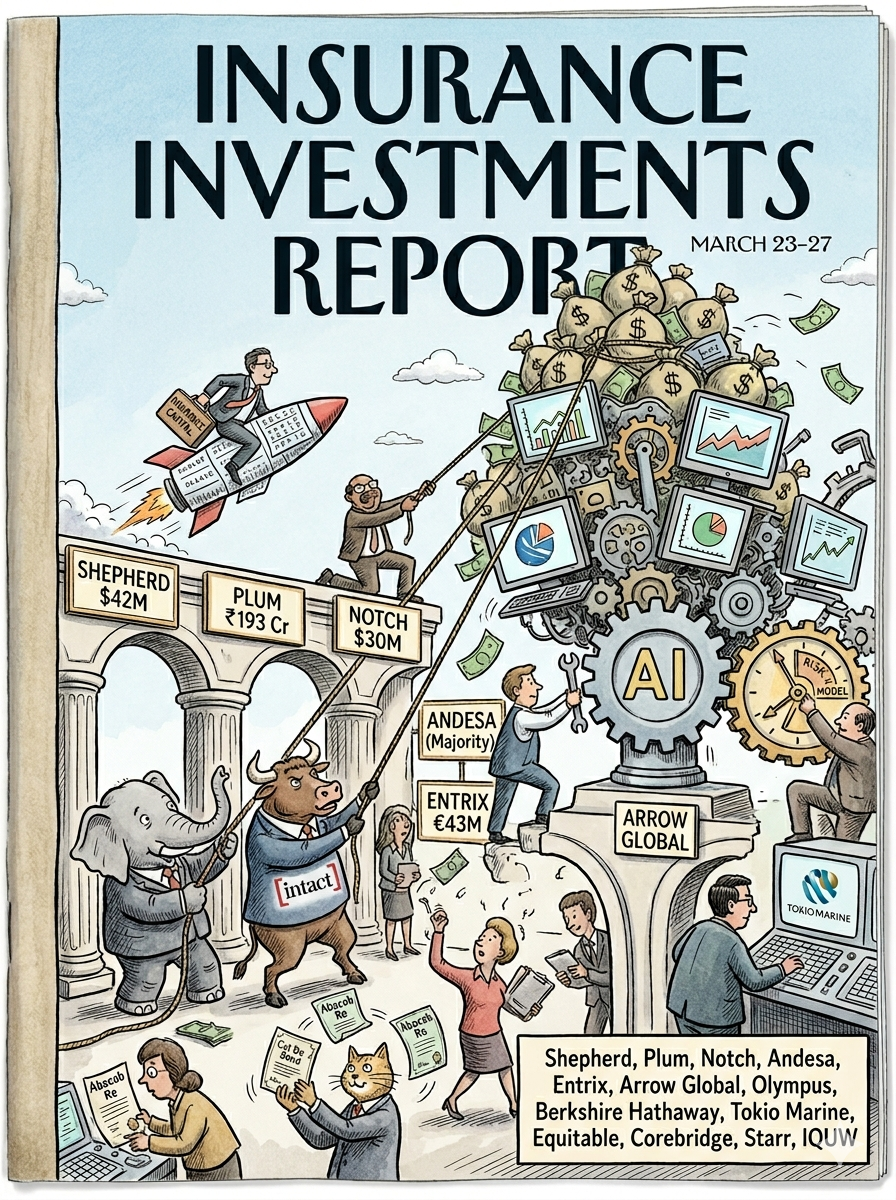
This week’s deals reinforce a single theme:
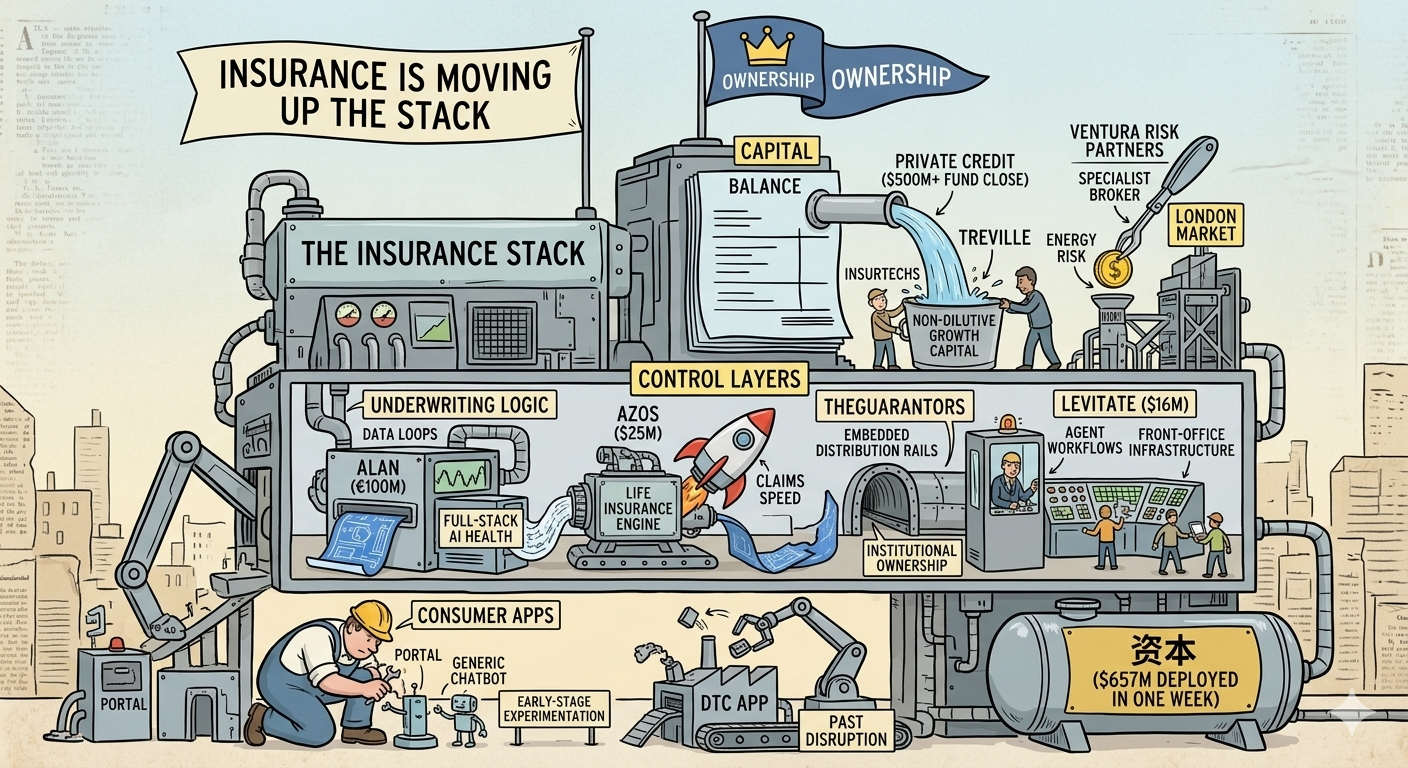
Insurance is being re-architected around workflows, data, and capital.
AI is moving into decision-making layers
Infrastructure players are capturing control points
Private capital is reshaping balance sheets and distribution
The competitive edge is no longer distribution or brand.
It’s:
Who owns the workflow—and who controls the capital behind it.
~$657M flowed into insurance last week.
But the signal isn’t the capital — it’s the direction.
A €5B+ health platform scaling across Europe.
A control deal in embedded insurance.
Carriers investing in agent-facing AI.
$500M shifting into insurance-linked private credit.
This isn’t about disruption anymore.
It’s about who controls the system.
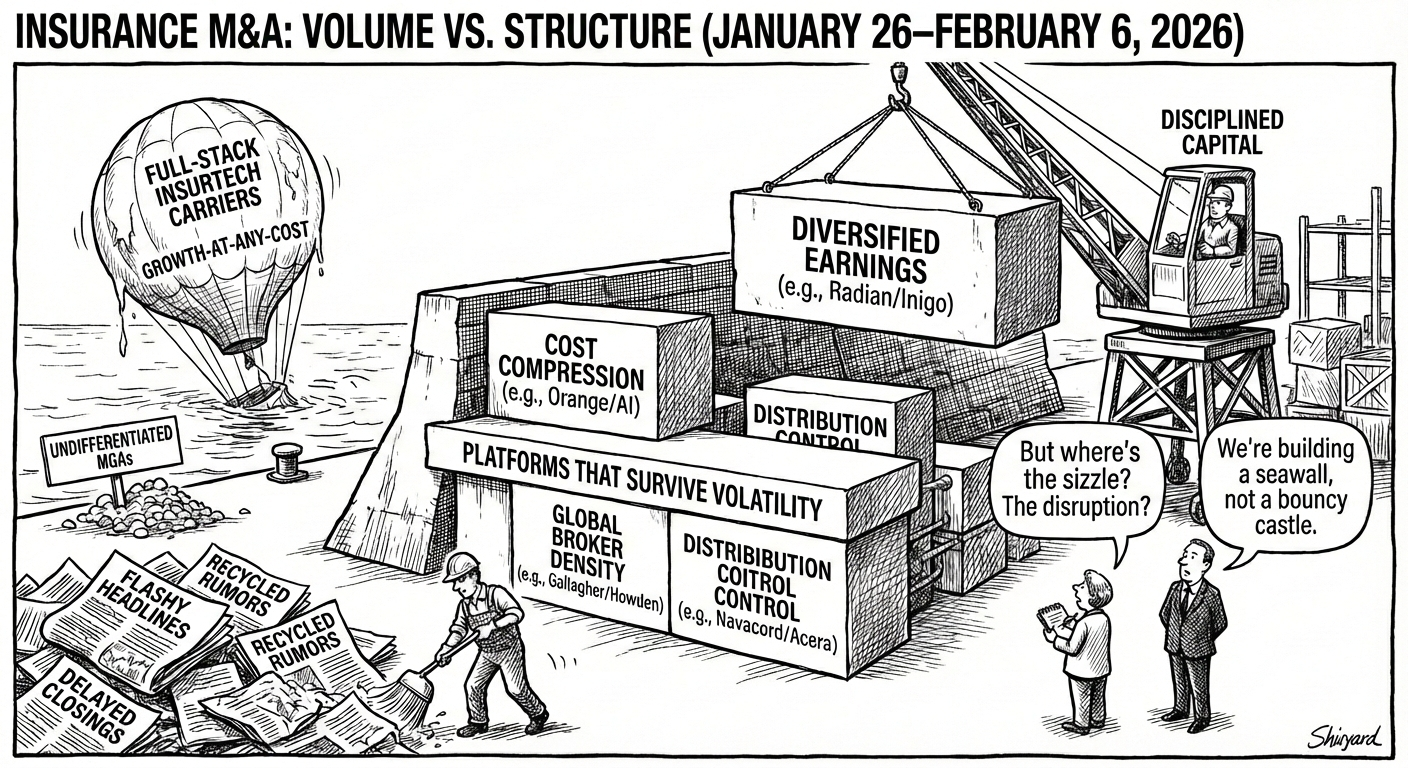
From January 26 to February 7, 2026, insurance and InsurTech M&A blended headline carrier moves with targeted distribution and tech plays. Meiji Yasuda and Radian closed multi‑billion‑dollar acquisitions that push them deeper into US term life and Lloyd’s specialty, while Zurich advanced an £8B bid for Beazley that could reshape the global cyber and specialty landscape. At the same time, WTW’s purchase of tech‑enabled broker Newfront, a string of regional roll‑ups by Hilb, WalkerHughes, Novacore, FMIG, Howden, Gallagher, Olea and K2, and intra‑InsurTech deals like HPN–Orange and Akur8–Matrisk show capital flowing toward distribution control, specialty underwriting and embedded AI capabilities
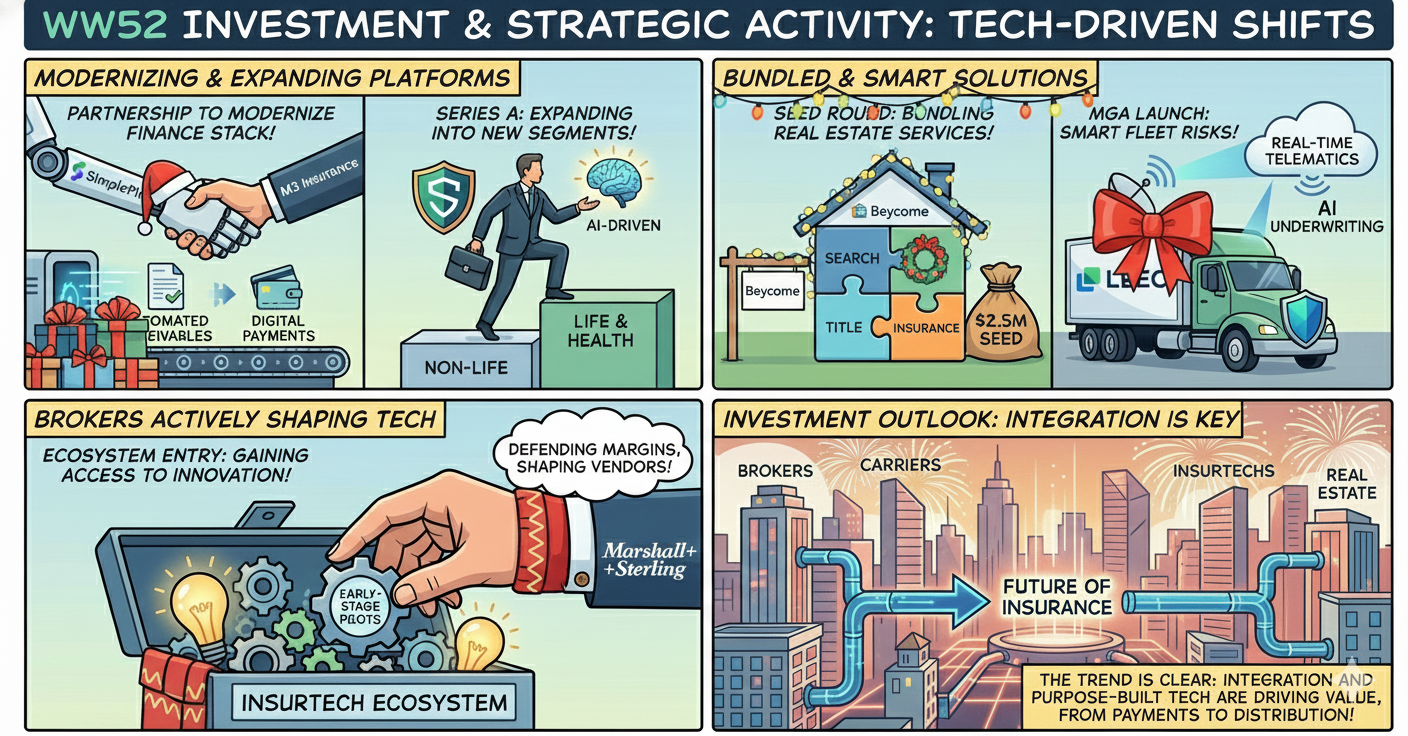
Late December is typically a dead zone for announcements. This year was different.
While primary dealmaking slowed, several material funding rounds, strategic partnerships, and ecosystem moves were formalized or surfaced during the holiday window—particularly across embedded real-estate insurance, commercial auto MGAs, and insurance-specific financial automation.
The pattern is consistent with broader 2025 dynamics: fewer announcements, but higher signal per deal, and capital continuing to flow toward platforms that control workflow, data, or distribution.
Bob Frady, co-founder and CEO of HazardHub.
HazardHub provides a comprehensive set of hazard risk and property data for every address in the United States.
A startup has a life but the people who breathe life into it…, well, they usually don't.
People like the idea of a startup. It is romantic. The excitement diminishes when they find out the extent of their responsibility and compensation. Basically, most people really want to work for Google. Google is a multibillion-dollar behemoth that has all the risk management tools and processes to support it. And yes! They still have all the perks and cool parties at the end of Google I/O.
May 29-31, 2019 | Austin, TX
Digital insurance is changing quickly, with every insurer in the market investing in digital strategies and deploying solutions – portals, mobile apps, home or personal devices and more—as they make digital strategy the heart of how they serve markets and customers. Along with this, the number of insurtech startups grows by the week as entrepreneurs and investors seek to capitalize on this rapidly changing market.
Andrew Egenes is Co-Founder and Head of Product for Layr.
Layr is an AI-powered business insurance platform that automates the role of brokers and underwriters which enables small business owners to purchase insurance tailored to their company in minutes while performing the most common insurance-related tasks from a simple self-service portal.
The entrance of startups to the insurance industry, nearly four years ago (2015), introduced a change, innovation, that made all the components, whether they are linear or passive, to react. The new teen spirit that the startup introduced acted as a step function that increased the value of the industry. The input may be a nice and clean function. It has a ripple effect that affects the entire pond until is converges on the new and higher level.


